
When a homeowner’s AC dies in July, they are not scrolling social media or waiting for a mailer to arrive. They are on Google, searching for someone who can come out today. HVAC PPC advertising puts your company in front of that person at exactly that moment. No other marketing channel can match that level of timing and intent, and for HVAC companies looking to build a reliable pipeline of leads, that difference is everything.
What Is HVAC PPC Advertising?
PPC stands for pay-per-click. You pay only when someone clicks your ad, which means your budget goes toward people who are actively engaging with what you offer rather than passively scrolling past. For HVAC companies, that typically means someone in your service area searching for emergency AC repair, furnace replacement, or seasonal tune-up services.
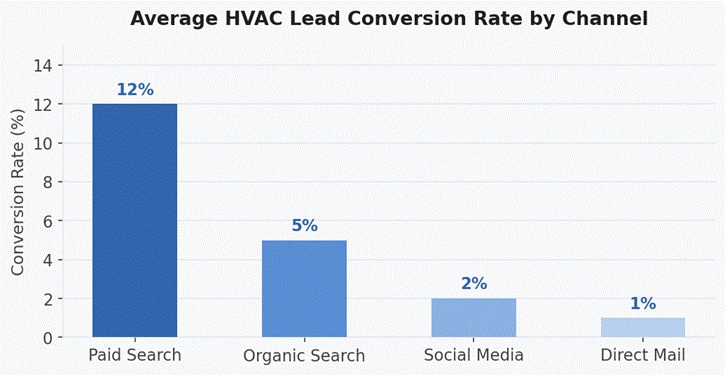
The most important thing to understand is that HVAC paid advertising is an intent-driven channel. You are reaching people at the exact moment they have a problem and are looking for a solution. That timing advantage is why HVAC leads from paid search tend to convert at far higher rates than leads from social media or direct mail.
If you are newer to the broader landscape of digital promotion for your trade business, our contractor marketing guide covers how paid advertising fits alongside other channels in a complete growth strategy.
The Core Channels for HVAC Paid Advertising
Google Search Ads
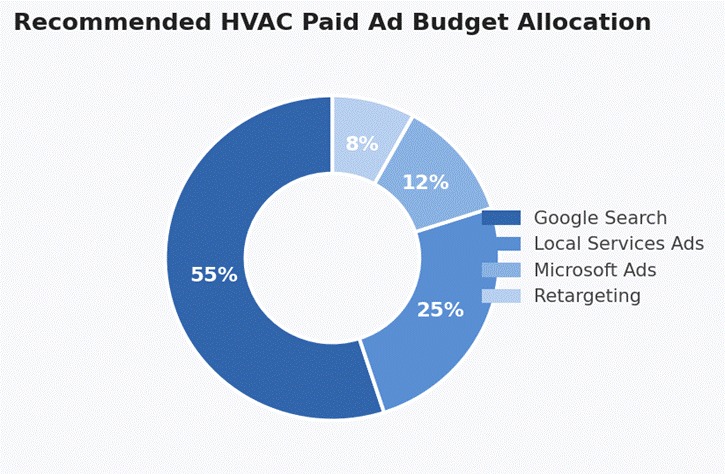
Google Search is the backbone of any HVAC PPC strategy. When a homeowner types “AC repair near me” or “furnace installation cost,” they are ready to call. Showing up at the top of those results with a compelling ad puts you directly in front of high-intent buyers.
The fundamentals of a well-built Google Search campaign for HVAC include:
- Keyword strategy: You need to target terms with transactional intent. “HVAC tune-up,” “emergency AC repair,” and “heat pump installation” are buyers. “How does an HVAC system work” is not. Mixing these together without a careful negative keyword list wastes budget fast.
- Match types: Broad match, phrase match, and exact match behave very differently. Broad match casts a wide net and often matches irrelevant queries. Exact match gives you control but limits volume. A well-structured campaign uses a combination, with aggressive negative keyword management to prevent waste.
- Ad copy: Your headline has to earn the click. Lead with your strongest differentiator, whether that is same-day service, a warranty offer, or a specific discount. Generic headlines like “HVAC Services in Detroit” will not outperform competitors who lead with concrete value.
- Landing pages: Sending paid traffic to your homepage is one of the most common and costly mistakes HVAC companies make. Every ad should point to a dedicated landing page that matches the search intent, loads fast on mobile, and makes it easy to call or fill out a form within seconds of arriving.
Google Local Services Ads (LSAs)
Local Services Ads appear above traditional paid search results and show a Google Guaranteed badge alongside your business name, rating, and phone number. For HVAC companies, they are an extremely high-value placement because the Google Guaranteed badge reduces friction for homeowners who are cautious about letting strangers into their homes.
LSAs operate on a pay-per-lead model rather than pay-per-click, and you can dispute leads that are not genuine. They require background checks and license verification, which creates a trust signal that benefits businesses willing to go through the process.
Running LSAs alongside traditional Google Search ads gives you the best chance of owning multiple positions at the top of the results page.
Microsoft Ads
Bing and Microsoft’s search network are often overlooked, but the audience skews toward older homeowners who are more likely to own their homes and have discretionary income for HVAC replacement and maintenance services. Competition is lower, cost-per-click tends to be cheaper, and the leads can be just as qualified. For most HVAC companies, Microsoft Ads should be a secondary channel after Google but should not be ignored entirely.
Retargeting
Most people who visit your website will not convert on their first visit. Retargeting campaigns serve display ads to people who have already been on your site as they browse other websites and apps. This keeps your company top of mind when the homeowner finally decides to make the call. Retargeting budgets are typically small relative to search, but the ROI is strong because you are re-engaging warm audiences rather than reaching cold ones.
Why Most HVAC PPC Campaigns Underperform
The answer almost always comes down to one of three problems.
- Poor account structure: Lumping all keywords into a single ad group prevents you from writing ads that are tightly relevant to specific search queries. When the ad does not match what someone searched, Quality Scores drop, cost-per-click rises, and conversion rates fall.
- No conversion tracking: If you do not know which keywords and ads are generating calls and form submissions, you are flying blind. Too many HVAC companies run campaigns for months without connecting the dots between ad spend and actual leads. This makes optimization impossible.
- Neglecting the account: Google Ads is not a set-it-and-forget-it system. Search terms change. Competitors adjust their bids. Seasonality shifts demand. An account that is not reviewed and updated regularly will erode in performance over time, often without the business owner noticing until the cost-per-lead has doubled.
For a deeper look at how paid search fits into a full HVAC growth strategy, read our blog on HVAC marketing.
Measuring HVAC PPC Performance: The Metrics That Matter
Revenue is the ultimate metric, but there are leading indicators that tell you whether your campaigns are healthy before the revenue numbers come in.
- Cost per lead (CPL): How much are you spending in ad dollars for each qualified inquiry? This varies by market and service type, but knowing your CPL and comparing it to your average job value tells you whether your campaigns are profitable.
- Conversion rate: What percentage of people who click your ad complete a desired action (call, form submission)? A low conversion rate usually points to a landing page problem rather than an ad problem.
- Search impression share: What percentage of available impressions are your ads actually capturing? If your impression share is low, you may be missing out on leads due to budget constraints or low Quality Scores.
- Lead quality: Not all leads are equal. Tracking which keywords generate leads that actually book and close keeps you from optimizing toward volume at the expense of quality.
Seasonal Considerations for HVAC Ads
HVAC demand is sharply seasonal, but the right paid advertising approach smooths out the curve. During peak cooling and heating seasons, aggressive budget allocation captures emergency repair leads at their highest intent. During shoulder seasons, shifting focus to maintenance agreements, equipment tune-ups, and replacement consultations keeps a steady flow of revenue-generating opportunities coming in.
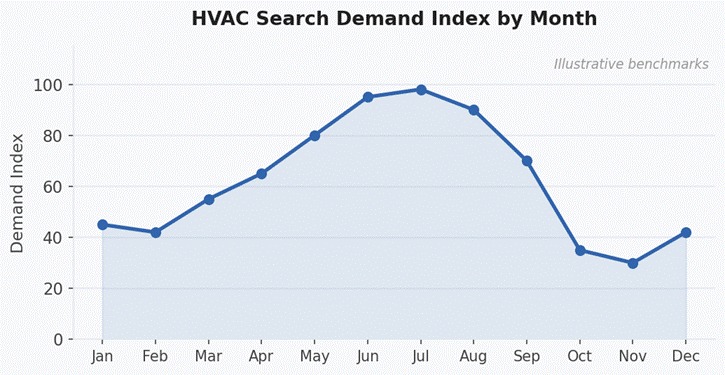
Smart bidding adjustments tied to weather data, time of day, and device type can further sharpen performance. Running campaigns year-round rather than turning them off in slow months keeps your Quality Scores healthy and prevents you from starting from scratch every season.
What to Look for in an HVAC PPC Partner
Managing Google Ads well requires more than knowing how to set up a campaign. It requires ongoing attention, deep knowledge of the HVAC industry, and an understanding of local market dynamics. When evaluating an agency or freelancer, look for a team that has demonstrated experience running campaigns specifically for home services businesses, provides transparent reporting tied to actual leads and revenue rather than just impressions and clicks, builds and manages dedicated landing pages rather than sending traffic to your homepage, and communicates proactively rather than disappearing after onboarding.
Our paid search services are built specifically for businesses that need consistent, qualified leads rather than inflated traffic numbers.
Ready to Generate More HVAC Leads with Paid Advertising?
Paladin PPC specializes in paid search management for HVAC and home services companies. We build campaigns that drive qualified leads, track every conversion, and optimize relentlessly to lower your cost per lead over time.
Contact us to talk through what a paid advertising strategy could look like for your business. You can also explore more about what we do at Paladin PPC before reaching out.